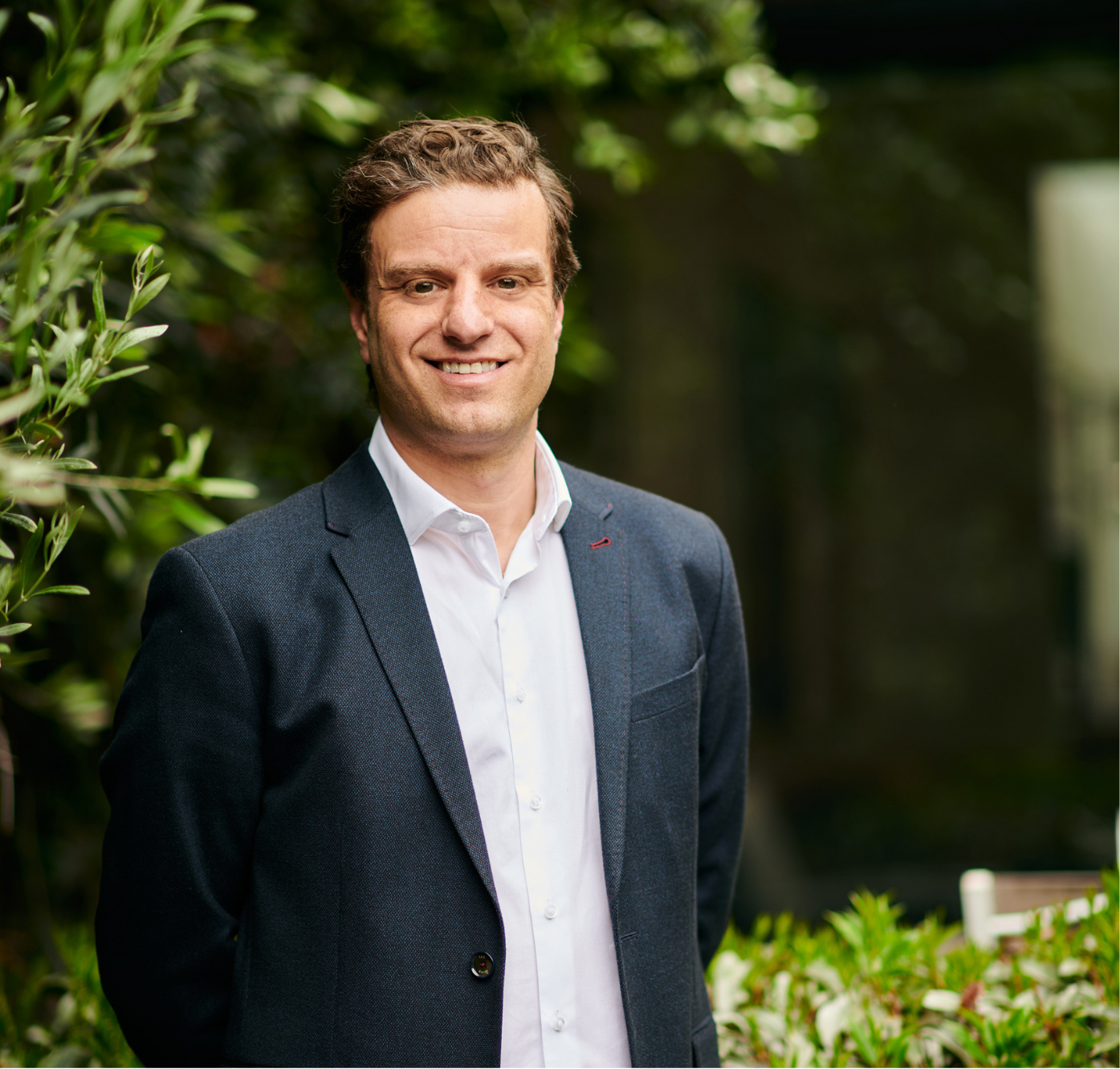



Liv Whitty, Oho's CEO, responds to recent 730 reports about the childcare sector.
That was a lot.
They were the first words I could muster after watching ABC's Four Corners investigation this week.
It was a difficult watch.
Ever since the public gained knowledge about the alleged childcare paedophile Joshua Dale Brown, we've finally seen a reckoning of sorts in Australia, spearheaded by swift action by the Federal Government as well as states and territories. 88 reforms and counting.
For this they should be congratulated.
I'm the CEO at Oho, where we provide our clients near real time worker checks and are a continuous safeguarding platform. Oho were established as a response to the findings of the Royal Commission into Institutional Responses into Child Sexual Abuse.
In my job I hear about the worst of humanity almost daily. The story on ABC on Monday night reaffirmed to me how confronting it can be to hear that predators are attracted to settings which should be the safest.
It also reaffirmed to me how difficult it can be to face these challenges head on. It's an uncomfortable reality we need to face.
There's no single villain, no simple fix. And while dark web investigations are crucial police work, they represent a last line of defence. By the time someone is uploading abuse material online, children have already been harmed.
We need to catch concerning behaviour much earlier, and we have the technology to do exactly that.
Oho monitor more than 220,000 workers daily across childcare, disability services, education, sport, community services and allied health.
We continuously connect to government registers across all Australian jurisdictions and immediately flag when credentials expire, get suspended or get revoked.
When something changes, the right people know immediately. But this continuous monitoring needs to become standard practice, not optional. Four priorities should guide Australia's next steps towards safer environments.
Four Priorities for Safer Environments
First, work with government-to-employer data to fix gaps through secure APIs or certified partner programs, similar to how the ATO uses trusted Single Touch Payroll providers.
Second, shift credential verification from one-time recruitment checks to continuous or at least quarterly monitoring with board visibility.
Third, link credential monitoring with behavioural reporting systems. The former AFP leader on child abuse investigations Drew Viney, who helped catch one of Australia's most prolific childcare predators, called for an intelligence network where staff can report conduct concerns.
That network needs to connect with credential status and reportable conduct frequency and outcomes in real time.
Fourth, approve certified solutions that continuously monitor credential data, rather than expecting each organisation to build this capability themselves.
These aren't theoretical recommendations. We work with 140 care and education organisations who've moved from partial compliance to near-perfect compliance through proactive, continuous safeguarding.
The government reforms represent real progress, but we need to look forward to the next steps that complete the picture by ensuring those improvements flow through to organisations actually employing workers every day.
Parents deserve to know that every worker is suitable to be there, not just on day one, but every single day they engage with children. Getting worker suitability right isn't technically hard. The systems exist, the data exists, the verification mechanisms exist.
What's needed is the infrastructure bridge to connect these pieces of data so organisations can focus on what matters: the actual care, education, and safety of children.